

Botanical remedies - Herbal Dispensary
Black Haw Bark Cut | Viburnum prunifolium L.
Black Haw Bark Cut | Viburnum prunifolium L.
Botanical Origin:
Certification:
Quality Grade:
Microbiological Standard:
Processing Method:
Couldn't load pickup availability
Delivery Speed: Fast 1–3 Day Tracked UK Shipping
Company Registration: Botanical Remedies LTD (No. 16096218)
Food Safety & Hygiene: FSA Registered (ID 1785398)
Organic Accreditation: Soil Association Licensed (DA31976 / GB-ORG-05)
Quality Guarantee: COA / COC available upon request.
20% Trade Discount available for verified practitioners.
Sustainably sourced from wild nature and premium organic or traditional farms
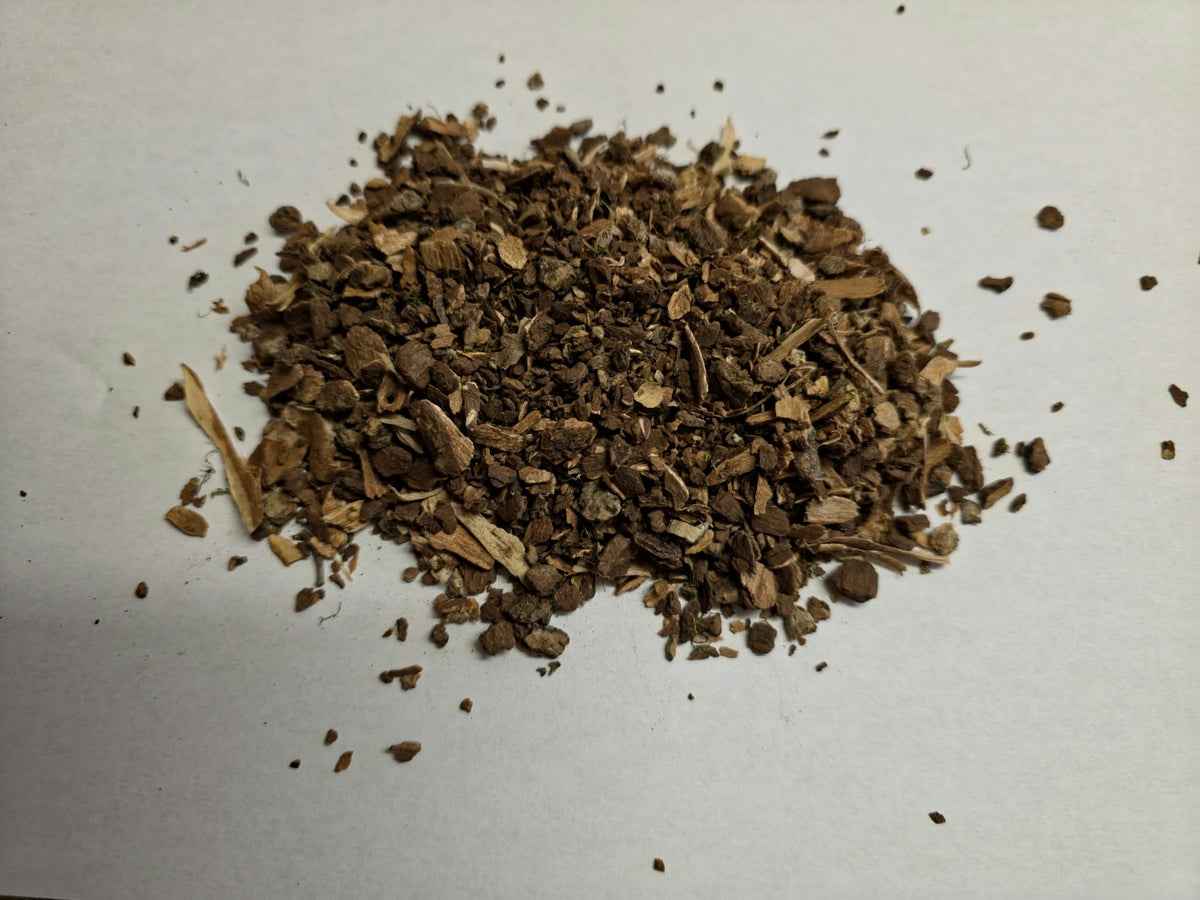
Black Haw Bark Cut (Viburnum prunifolium L. / Viburni prunifolii cortex concisus) is supplied as a supreme, practitioner-grade loose botanical hand-picked and sustainably wild-crafted from mature native trees across North American deciduous woodland ecosystems. Celebrated across centuries of classical Eclectic Materia Medica, Anglo-American apothecary practice, and traditional folk herbalism as stagbush, sweet viburnum, and plum-leaved guelder rose, the dried stem and root bark represents the pre-eminent botanical sovereign for uterine relaxation and pelvic smooth muscle comfort. Harvested during the dormant autumn and early spring cycles when active coumarins and bitter glycosides reach peak concentration, this classic woodland harvest supplies medical herbalists, naturopaths, and compounding apothecaries with uncompromised constituent density and verified laboratory excellence.
Classic Native Woodland Provenance & Processing Integrity:
The mature bark naturally concentrates an intricate phytochemical complex of coumarin derivatives (notably scopoletin), triterpenes (including ursolic and oleanolic acids), phenolic glycosides, natural tannins, and volatile isovaleric acid fractions. Hand-picked and responsibly stripped from wild-crafted stands in unpolluted deciduous woodlands across the USA, the gathered bark is immediately cleansed, shade-cured with gentle warm air to safeguard volatile aromatics, and precision-cut into firm, curved quill segments. Operating under audited GMP and HACCP quality assurance systems, every step preserves the delicate resinous matrix from oxidative degradation without the use of chemical preservatives or fumigation. Delivered as 100% pure single-species raw botanical material, the cut bark is hand-packed in food-grade barrier craft paper bags with an internal protective Polyethylene (PE) lining to maintain peak botanical freshness and guard against ambient humidity.
"Revered throughout the golden era of Eclectic medicine as the premier botanical restorative for the pelvic architecture—black haw is traditionally classified energetically as bitter, astringent, slightly sweet, neutral to cool, and drying. Holding an ancestral affinity for the Uterus, Pelvic Viscera, Vascular Smooth Muscle, and Nervous System, it is prized for pacifying rebellious muscular tone, easing spastic tension, and restoring calm constitutional equilibrium."
🌿 Traditional Energetics, Tissue Affinities & Black Haw Lore
In classical Western herbalism, Eclectic medicine, and heritage apothecary practice, black haw is esteemed as a premier apothecary-grade smooth muscle relaxant and tonifying pelvic restorative:
- Smooth Muscle Relaxation & Pelvic Tone: Celebrated in herbal lore as Western herbalism's most dependable botanical for soothing tension in involuntary smooth muscle fibers, particularly throughout the uterine and lower pelvic architecture during natural monthly cycles.
- Scopoletin & Vascular Calming: The bark's characteristic presence of scopoletin provides gentle relaxing qualities that soothe peripheral vascular tension, supporting smooth systemic blood flow and easing vascular tightness without lethargy.
- Astringent Tone & Mucosal Fortitude: Rich natural tannins exert a mild, firming influence on relaxed mucosal membranes and engorged pelvic tissues, helping to tonify lax structural tone while calming excessive fluid movements.
- Eclectic Heritage & Historical Regard: Extensively documented by 19th-century American Eclectic physicians, who considered it superior to almost all other native barks for harmonizing reproductive vitality and pacifying irritable visceral reflexes.
- Apothecary Lore & Dispensary Synergies: In traditional apothecary compounding, the cut bark pairs harmoniously with sister botanical Cramp Bark for full-body skeletal and smooth muscle relaxation, Wild Yam Root for deep visceral comfort, and Ginger Root to gently warm pelvic circulation.
🍵 How to Prepare Black Haw: Infusions, Simmered Decoctions & Tonics
Because the plant material consists of dense, fibrous, and lignified tree bark rich in resinous glycosides, proper extraction requires sustained simmering to fully liberate its active constituents:
- Traditional Simmered Decoction (Recommended Method): Place 1 to 2 teaspoons (approx. 3g to 5g) of cut bark into a saucepan (use stainless steel, glass, ceramic, or enamel cookware—avoid bare aluminium cookware, as natural plant tannins and acids react with reactive metals). Add 300ml to 400ml of cold purified water. Cover tightly with a lid, bring to a gentle boil, then reduce heat to low and simmer softly for 15 to 20 minutes. Strain thoroughly through a fine mesh strainer and enjoy warm. Can be taken up to 3 times daily as a daily measure.
- Traditional Covered Infusion (Herbal Tea Preparation): For a lighter cup of tea, finely crush 1 teaspoon of cut bark in a mortar. Place into a pre-warmed mug or teapot, pour over 250ml of freshly boiled water, immediately cover tightly with a saucer or lid to trap volatile aromatic principles, and allow to steep covered for 20 to 25 minutes before straining.
- Dispensary Hydro-Ethanolic Tinctures: For compounding herbalists crafting concentrated liquid extracts, cut bark pieces can be macerated directly in 50% to 60% organic grain alcohol at a 1:5 ratio for 4 to 6 weeks, yielding a rich, dark amber fluid extract concentrated in both water-soluble and resinous coumarins.
- Soothing Warm Compresses: Simmer 3 to 4 tablespoons of cut bark in 1 litre of water for 25 minutes. Soak an unbleached cotton or flannel cloth in the strained warm liquid and apply topically over the lower abdomen to provide comforting external warmth.
🔬 Black Haw Sourcing, Monograph Standards & Quality Safety
Every single consignment of our cut bark undergoes comprehensive analytical screening and quality control to satisfy strict UK and European Pharmacopoeia safety benchmarks:
- Authentic Native Provenance: Gathered exclusively from wild-growing mature stands in pristine deciduous woodlands across the USA, verifying true botanical identity and optimal environmental accumulation of scopoletin and triterpenes.
- 100% Botanical Purity Standard: Hand-inspected and hand-graded in our UK clean room during packing to manually eliminate non-target botanical debris, wood splinters, and mineral dust, delivering 100% pure single-species raw botanical material in every pack.
- Universal GMP & HACCP Compliance: Handled, dried, cut, and packaged under audited Good Manufacturing Practice (GMP) and Hazard Analysis Critical Control Point (HACCP) quality assurance systems.
- Pharmacopoeia Moisture Standards: Routinely tested for moisture loss on drying verified against strict herbal monograph benchmarks (< 12% for dried cut barks), preventing microbial proliferation and safeguarding active glycosides against degradation.
- Statutory Heavy Metal & Environmental Contaminant Controls: Fully compliant with Commission Regulation (EU) 2023/915 and Reg (EC) 333/2007, every delivery is verified well below statutory surveillance limits for heavy metals (Lead < 3 ppm, Cadmium < 1 ppm, Mercury < 0.1 ppm, Arsenic < 5 ppm), polycyclic aromatic hydrocarbons (PAH sum < 50 ppm), and mycotoxins (Aflatoxin B1, total aflatoxins, and Ochratoxin A). Screened against 35 pyrrolizidine alkaloids and tropane alkaloids.
- Pesticide Residue Clearance: Full compliance with Regulation (EC) No 396/2005 on maximum residue levels in plant foodstuffs, guaranteeing clean botanical material free of prohibited synthetic chemical sprays or environmental residues.
- Microbiological Safety Criteria: Tested absent for Salmonella in 25g in accordance with Commission Regulation (EC) No 2073/2005. Batches independently verified to Ph. Eur. Category A microbiological criteria for herbal infusions (TVC target ≤ 10⁷ cfu/g, E. coli target < 10 cfu/g, Yeasts & Moulds target ≤ 10⁵ cfu/g).
- Physical Screening: All batches pass through calibrated metal detection (Fe 3.5mm, Non-Fe 5.5mm, Stainless Steel 5.0mm) to guarantee absolute physical purity.
- Non-GMO & Non-Irradiated Verification: Verified 100% non-GMO under Regulations (EC) No 1829/2003 and 1830/2003. Certified untreated by ionizing radiation under the Regulation of the Minister of Health of 20 June 2007. Ethylene oxide compliant under Regulation (EU) 2015/868.
- Documentation & Master Herbalist Sign-Off: Certificates of Conformance (CoC) are available upon request. In-house organoleptic assessment and final dispensary approval are personally conducted by Master Herbalist Wojciech Bujak upon batch arrival.
📊 Black Haw Technical Specifications & Dispensary Standards
| Specification Metric | Dispensary Standard |
|---|---|
| Botanical Name | Viburnum prunifolium L. |
| Commercial Stream Format | Classic Native Woodland Harvest (Cut Bark) |
| Common / Traditional Names | Black Haw, Stagbush, Sweet Viburnum, Plum-Leaved Guelder Rose |
| Plant Part & Format | 100% Pure Dried & Cut Stem and Root Bark |
| Purity Standard | 100% Pure Botanical Material |
| Dispensary Quality Grade | Practitioner-Grade | Classic Woodland Harvest |
| Quality Assurance Systems | Audited GMP & HACCP Certified Supply Chain |
| Country of Origin | United States (USA Wild-Crafted Harvest) |
| Harvest & Sourcing Method | Hand-picked and wild-crafted from native woodland trees |
| Drying & Processing Method | Naturally warm-air shade-cured, precision-cut |
| Monograph Moisture Benchmark | < 12.00% (Ph. Eur. Cut Bark Standard) |
| Bioactive Focus | Scopoletin, triterpenoid saponins, tannins & isovaleric acid |
| Organoleptic Appearance | Firm, curved reddish-brown to dark grey-brown cut quill segments |
| Aroma & Flavour Profile | Distinctive earthy, slightly valeric aroma; bitter, astringent, mildly acrid taste |
| Microbiological Verification | Ph. Eur. Category A (Salmonella absent in 25g) |
| Contaminant Screening | Commission Regulation (EU) 2023/915 Compliant |
| Dispensary Packaging | Food-grade barrier craft paper bags with protective Polyethylene (PE) lining |
| Dietary & Ethical Suitability | 100% Pure Botanical | 100% Vegan & Vegetarian | Non-GMO | Non-Irradiated |
| Storage Guidance | Store sealed in original packaging in a cool, dry place away from direct light to maintain optimal botanical vibrancy and aroma over time. |
⚠️ Important Botanical Considerations & Suitability for Black Haw
- Aspirin & Salicylate Sensitivity: Because the bark naturally contains trace amounts of plant salicylates, individuals with known hypersensitivity or allergies to aspirin or salicylate compounds should exercise caution and consult their GP or Medical Herbalist prior to use.
- Kidney Stone & Oxalate Considerations: The plant naturally contains trace amounts of organic oxalates. Individuals with a history of calcium oxalate kidney stones should use caution when establishing a daily botanical routine.
- Pregnancy & Lactation: While historically utilized by Eclectic herbalists during late stages of pregnancy under strict professional supervision, self-administration during early pregnancy or while breastfeeding is not recommended due to its active influence on uterine smooth muscle tone. Always consult a qualified Medical Herbalist before use.
- Blood Pressure Medication Considerations: Because the bark exerts gentle vascular relaxing properties, individuals taking prescription hypotensive pharmaceuticals should monitor their blood pressure readings closely.
- Elective Surgery Advisory: Due to traditional botanical influences on vascular dynamics, discontinue consumption of bark preparations at least 2 weeks prior to scheduled surgical or dental procedures.
- Dispensary Allergen Segregation: 100% pure botanical bark. Hand-packed in a certified dispensary clean room. At Botanical Remedies, raw Celery Seed is handled on-site under strict, segregated isolation protocols to eliminate cross-contact risks.
Professional UK Herbalist Standards & Botanical Information
Because of UK regulations, we do not make medical or health claims regarding our botanicals. However, at Botanical Remedies, we only supply botanicals supported by centuries of documented traditional literature and verified laboratory analysis.
Where can you find reliable, traditionally and scientifically grounded information about herbs, dosages, and safety?
- Botanical Remedies Blog — Articles published by our Master Herbalist and Naturopath
- Herbal Reality — Website run by experienced UK Medical Herbalists
- Richard Whelan — Website run by Medical Herbalist
Explore Our Dispensary: Complementary Botanicals
- Cramp Bark: Close botanical sister species (*Viburnum opulus*) providing complementary muscular relaxation across both voluntary skeletal and involuntary smooth muscle tissues.
- Organic Ginger Root: Warming circulatory rhizome traditionally added to enhance pelvic microcirculation and warm digestive assimilation of bitter bark decoctions.
⚠️ Disclaimer: This product is a raw botanical material and is not classified as a medicine. It is not intended to diagnose, treat, cure, or prevent any disease. Always consult your GP or Medical Herbalist before starting a new herbal regime.
Frequently Asked Questions About Black Haw
What is the difference between Black Haw (Viburnum prunifolium) and Cramp Bark (Viburnum opulus)?
While both botanicals share similar smooth muscle relaxing properties and belong to the Viburnum genus, Black Haw (*Viburnum prunifolium*) exhibits a stronger traditional affinity for uterine smooth muscle tone and vascular pathways. In contrast, Cramp Bark (*Viburnum opulus*) is more broadly utilized for general skeletal muscle tension and congestive cramping throughout the body.
Why does dried black haw bark require a simmered decoction rather than a quick steep?
Dried black haw bark possesses a dense, woody, and fibrous structural matrix that standard hot water steeping cannot adequately penetrate. Gently simmering the cut pieces in a covered saucepan for 15 to 20 minutes slowly softens the lignified cell walls, ensuring complete extraction of active coumarins, triterpenes, and bitter glycosides into the brew.
Why does authentic black haw bark have a characteristic earthy, valeric-like aroma?
The distinctive, slightly pungent, and earthy scent of black haw is an authentic botanical hallmark caused by naturally occurring isovaleric acid derivatives present in the genuine bark. This complex aroma, combined with an astringent bitter taste, serves as direct organoleptic confirmation of unadulterated botanical identity and high constituent richness.
How should cut black haw bark be stored to maintain its potency over time?
Store your cut bark sealed in its original airtight Botanical Remedies barrier packaging or in an opaque glass jar in a cool, dry pantry below 25°C, away from direct sunlight, steam, and ambient moisture. When kept dry and protected from light, properly stored cut roots and barks maintain their full aromatic vitality and constituent integrity over time.
Share
Certified Organic Product — Checked and verified by the Soil Association. View our official credentials