Botanical remedies - Herbal Dispensary
Premium Safflower Petals Whole (Carthamus tinctorius) | Apothecary Grade
Premium Safflower Petals Whole (Carthamus tinctorius) | Apothecary Grade
Botanical Origin:
Certification:
Quality Grade:
Microbiological Standard:
Processing Method:
Couldn't load pickup availability
Delivery Speed: Fast 1–3 Day Tracked UK Shipping
Company Registration: Botanical Remedies LTD (No. 16096218)
Food Safety & Hygiene: FSA Registered (ID 1785398)
Organic Accreditation: Soil Association Licensed (DA31976 / GB-ORG-05)
Quality Guarantee: COA / COC available upon request.
20% Trade Discount available for verified practitioners.
Sustainably sourced from wild nature and premium organic or traditional farms
Premium Cultivated Quality | 100% Pure Whole Dried Middle Eastern Flower Petals
"A brilliant, nutrient-dense, and highly versatile ancestral botanical—cultivated across the sun-drenched valleys of the Middle East to yield an exceptional, laboratory-pure matrix of active flavonoids and natural pigments."
Sourced directly from the optimal agricultural microclimates of the Middle East—a historic geographical terroir globally recognized for producing annual botanicals with intense color saturation and dense secondary metabolite profiles—our Whole Safflower Petals represent the pinnacle of practitioner-grade quality. Formally classified under the taxonomical designation Carthamus tinctorius and revered across classical world traditions as Koosumbha, Hoang-tchi (or Hong Hua), and Krokosz barwierski, this resilient thistle-like member of the Asteraceae family has been a pillar of textile art, culinary crafting, and advanced traditional apothecary practice for millennia.
At Botanical Remedies, we select only exceptional-quality, whole-vessel flower petals that have been carefully shade-dried to lock in their active volatile principles. Passing through rigorous laboratory testing filters to verify total purity, our Middle Eastern Safflower remains vibrant, completely intact, and free from added synthetic dyes, preservatives, or chemical handling agents. This makes it an invaluable, highly efficient tool for professional medical herbalists, natural cosmetic compounders, and discerning traditional practitioners.
🌿 The Energetic Architecture of Safflower Petals
In traditional old-world Western herbalism, old-world Asian systems, and modern constitutional medicine, whole Carthamus tinctorius petals exert a dynamic, highly fluidic physical influence:
- The Organoleptic Profile: Delivers a beautifully mild, slightly sweet, and distinctly floral initial flavor path, elegantly rounded out by subtle, comforting earthy undertones and a warm aromatic fragrance.
- Core Botanical Footprint: Formally categorized across traditional lineages as an inherently Invigorating, Moving, Dispersing, Toning, and Gently Warming botanical.
- Systemic Actions: Operating primarily as a gentle thermal catalyst, whole safflower petals are traditionally utilized to encourage smooth, unhindered internal movement. Its warming nature helps clear cold or stagnant patterns, tones the peripheral tissue matrices, and restores an active, vibrant equilibrium to sluggish constitutional profiles.
💎 Phytochemical Depth: The Saffron Alternative
Safflower petals have a rich, global history of serving as an affordable, highly efficient alternative to true saffron (Crocus sativus). While it does not share the exact chemical composition of true saffron, it mirrors its visual properties and offers its own highly complex biochemical network that clinical practitioners value:
- The Carthamin Pigment Matrix: Safflower petals naturally concentrate a unique duality of natural pigments: water-soluble Safflor Yellow and water-insoluble Carthamin (a brilliant red compound). When extracted into various mediums, these compounds deliver stunning visual hues alongside high-density antioxidant protection.
- Flavonoid & Glycoside Abundance: Packed with highly bioavailable chalcone glycosides (including carthamidin) and protective plant flavonoids. These components work actively as free-radical scavengers, supporting microvascular health and skin tissue integrity.
- Soothing Plant Mucilage: The intact petal tissues retain a light, natural mucilage fraction that helps soften the delivery of its warming active compounds, ensuring a smooth, non-irritating interaction with sensitive internal mucosal paths.
🔮 A Millennial History of Global Utility
The cultivation of Carthamus tinctorius traces directly back to the cradles of ancient civilization, making it one of humanity's oldest utilized crops. Archaeologists have recovered textiles dyed with safflower petals within ancient royal tombs, proving its incredible status as a premier elite colorant over 4,000 years ago.
Across the historic Silk Road trading paths, it evolved into a highly traded commodity. In Traditional Chinese Medicine, it was termed Hong Hua (Red Flower) and became a foundational Materia Medica choice for invigorating the blood and breaking up stasis. Concurrently, in Ayurvedic traditions under the name Koosumbha, it was crafted into specialized oils and warm wellness drafts. Today, Botanical Remedies brings this exact ancestral pedigree forward, thoroughly lab-verified for contemporary clinical safety and absolute botanical authenticity.
⚠️ MANDATORY APOTHECARY PROTOCOL: THE SAFETY BOUNDARIES
Strict Pregnancy Contraindication
Whole Safflower Petals contain highly active, moving botanical signatures that interface directly with internal fluid channels and smooth muscle responses. To ensure absolute safety, practitioners must strictly observe this primary clinical boundary:
- Absolute Pregnancy Contraindication: DO NOT CONSUME SAFFLOWER PETALS IN ANY FORM IF YOU ARE PREGNANT, SUSPECT PREGNANCY, OR ARE PLANNING A PREGNANCY. Due to its powerful, historically documented emmenagogue actions (the ability to stimulate and move blood flow throughout the pelvic and uterine region), it must be completely avoided during all stages of gestation to guarantee absolute prenatal safety.
- General Suitability: Safe and highly efficient for use by qualified Herbalists, practitioners, and healthy adults when utilized within standard recommended literature dosages. Completely friendly for Vegan and Vegetarian lifestyles.
Advanced Preparation & Extraction Mediums
Our loose, whole safflower petals are exceptionally adaptable and can be successfully extracted into a wide variety of practitioner bases, including powders, water infusions, alcohol tinctures, traditional vinegars, or skin-nourishing infused carrier oils:
Preparing a Traditional Covered Water Infusion
- The Proportions: Measure out 1 to 2 teaspoons of premium whole dried safflower petals and place them directly into a high-quality glass or ceramic tea infuser or covered cup.
- The Extraction Fluid: Pour over one standard cup (approximately 250ml) of hot, but strictly not boiling water (ideally cooled slightly to 85°C–90°C to protect the delicate floral structures from scorching).
- The Covered Steeping Phase: Crucial Step: Immediately cover your vessel with a tight-fitting lid or saucer. This completely traps the escaping steam, forcing the highly active, volatile floral aromatics and delicate glycosides to condense directly back down into your cup. Allow the mixture to steep quietly for 10 to 15 minutes.
- The Serve: Strain the clean, beautifully golden-orange liquid thoroughly. Sip slowly to experience its authentic, mild, and naturally sweet floral flavor profile.
🌿 Technical Specifications & Quality Control
Botanical Name: Carthamus tinctorius L. (Synonyms: Loose Safflower Petals, Whole Dried Safflower, Saffron Substitute, Koosumbha, Hoang-tchi, Hong Hua, Krokosz Barwierski)
Part of Plant: 100% Pure Whole Dried Flower Petals (Intact, whole-vessel floral corollas)
Grade & Quality: Premium Apothecary Grade / Lab-Proven Pure Botanical Material
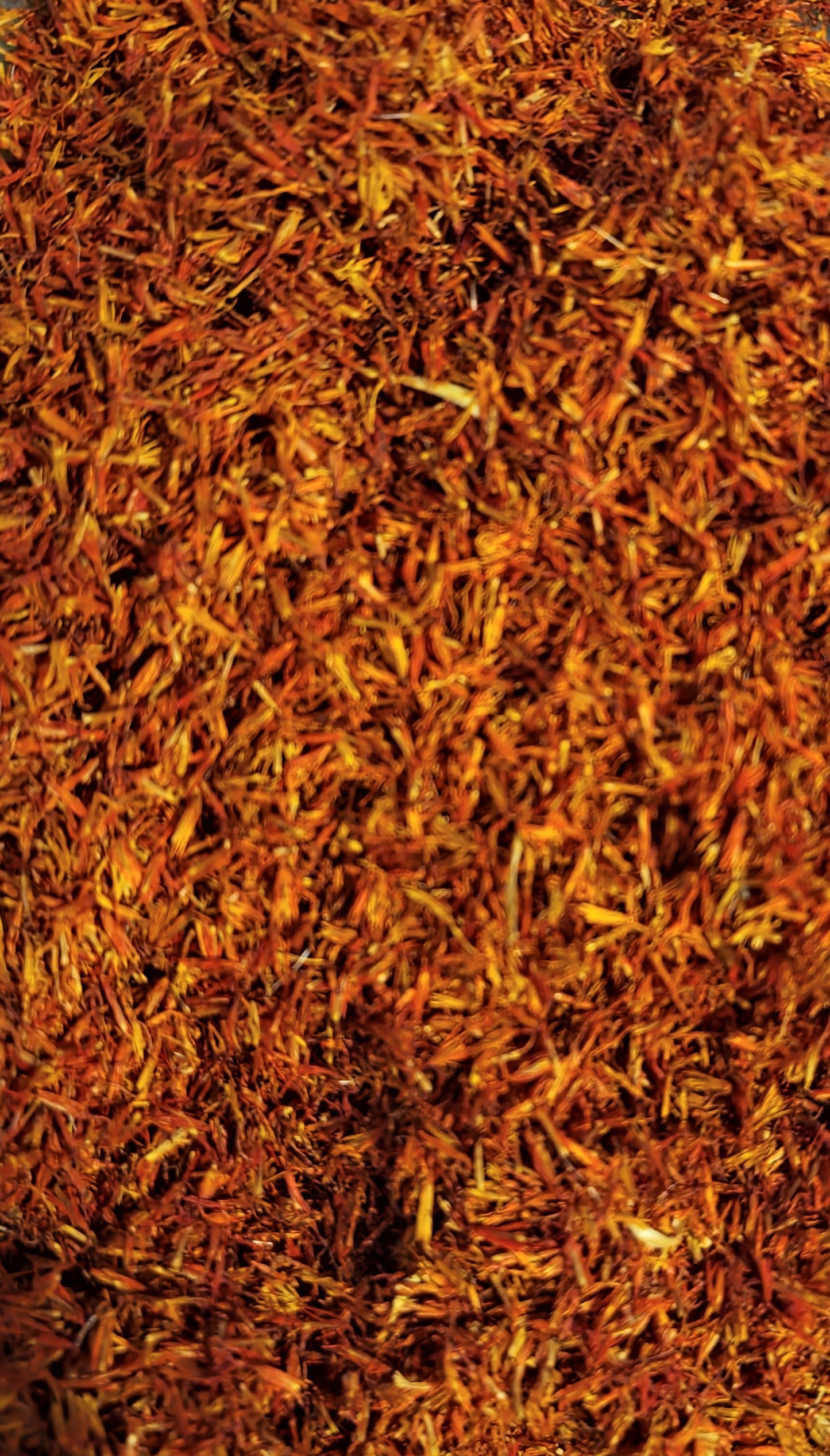
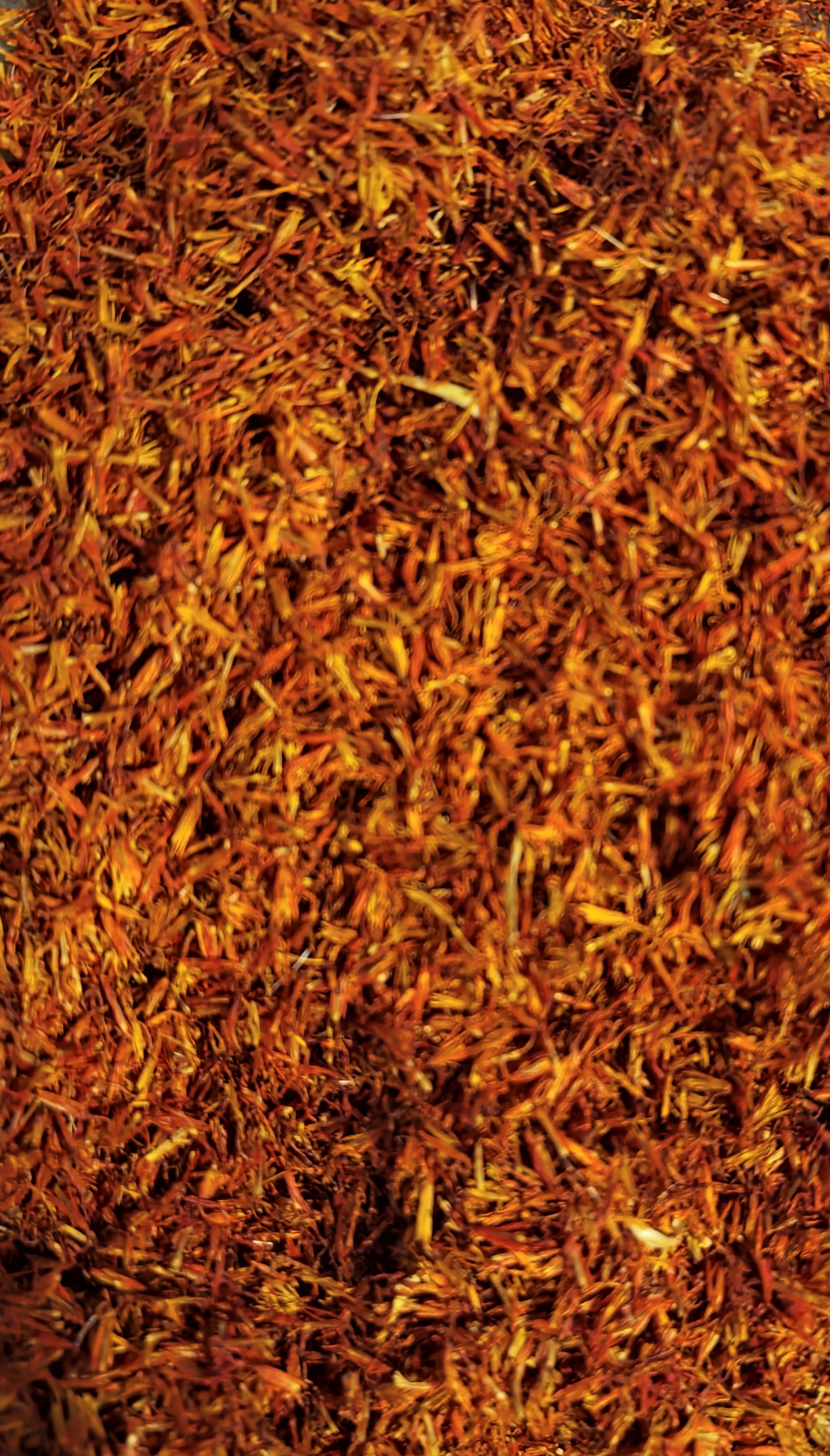
Color & Sensory Profile: A breathtaking, highly vibrant matrix of fiery orange, deep crimson, and golden-yellow slender whole petals. Delivers a mild, subtly sweet, and complex floral aroma with clean, pleasant earthy undertones.
Dietary Suitability: 100% suitable for vegan, vegetarian, raw, clean-label, and gluten-free lifestyles.
Microbiological Safety: Products are subject to routine microbiological analysis. Limits verify the absolute absence of Salmonella in 25g.
Contaminants Compliance: Tested in accordance with Commission Regulation (EU) 2023/915 on maximum levels for certain contaminants in food, ensuring strict pesticide, heavy metal, and environmental clearance thresholds.
Quality Assured: Primary manufacturer microbiological and chemical testing verified upon arrival. Final dispensary organoleptic assessment and batch verification are personally conducted by Master Herbalist Wojciech Bujak to guarantee absolute botanical authenticity.
Documentation: Batch-specific Certificates of Conformance (CoC) are available upon request.
Origin & Status: Middle East. 100% Premium Cultivated. Non-GMO. Non-Irradiated. Absolute zero synthetic dyes, chemical coloring inputs, artificial flavorings, industrial preservatives, or blending fillers.
Dispensary Packaging: Hand-packed in our eco-friendly, UV-protective, and resealable paper barrier bags to seal out external moisture and shield the light-sensitive carthamin pigments from ambient solar breakdown.
⚠️ EXTENSIVE SAFETY CONTRAINDICATIONS & WARNINGS
- Hypersensitivity Advisory: Do not use this botanical if you have a known allergy or hypersensitivity to Safflower, or any other members of the Asteraceae (daisy / sunflower / composite) plant family. Discontinue use immediately if any reactive signs or dermal responses occur.
- Allergen Advice: 100% pure botanical, absolutely nothing added. Free from artificial colours, artificial flavourings, and added sugars. Allergen advice: The primary processor handles cereals containing gluten, celery, mustard, sesame, peanuts, and various nuts. At Botanical Remedies, we handle only Celery Seeds on-site; all strict safety and isolation measures are rigorously in place to prevent cross-contamination.
Professional UK Law & Practitioner Standards
At Botanical Remedies, we bring strict professional herbal testing standards to our dispensary. We only offer barks, roots, leaves, and flowers that have been thoroughly tested for authenticity, quality, and purity. Please do not confuse standard mass-market supplements with our practitioner-grade offerings.
Where can you find reliable, traditionally and scientifically grounded information about herbs, dosages, and safety?
- Herbal Reality — Web run by experienced Medical Herbalists
- Richard Whelan Medical Herbalist — Web run by Medical Herbalist
- Botanical Remedies Blog — Blog run by Master Herbalist and Naturopath
⚠️ Disclaimer: This product is a food supplement/botanical material and is not intended to diagnose, treat, cure, or prevent any disease. Always consult your GP or Medical Herbalist before starting a new herbal regime, especially if you are taking prescription medication or undergoing medical supervision.
Frequently Asked Questions About Whole Safflower Petals
Q: Is Safflower identical to true Saffron, and can it be used as a direct substitute?
A: Safflower (Carthamus tinctorius) and true Saffron (Crocus sativus) are completely different botanical species from entirely separate plant families! Saffron consists of the hand-harvested stigmas of a specific spring crocus, making it the most expensive spice on Earth. Safflower, by contrast, is a robust thistle-like annual plant. While they are completely different chemically, safflower is globally celebrated as an excellent, highly efficient alternative because its rich petals release an almost identical magnificent golden-yellow color and a beautifully subtle, sweet floral flavor into liquids at a fraction of the cost.
Q: Why is there a strict contraindication warning regarding Safflower consumption during pregnancy?
A: This is a vital rule across all professional apothecary practices. In both traditional Western and Asian herbal lineages, whole safflower petals are classified as a powerful emmenagogue and blood-moving agent. The active plant compounds possess a natural affinity for stimulating fluid movement throughout the pelvic basin and gently interacting with smooth muscle fibers. While this action is perfectly safe and efficient for regular adult wellness regimens, it must be completely avoided during all stages of pregnancy to ensure total, uncompromised prenatal safety.
Q: How can Safflower Petals be utilized to create a traditional skin-nourishing infused oil?
A: Because safflower contains unique fat-soluble pigments and robust flavonoids, it makes a spectacular base for artisanal cosmetic compounding! To prepare a traditional infused oil, simply place a clean layer of dry whole petals into a sterile glass jar and submerge them completely under a high-quality carrier oil (such as organic jojoba, almond, or sunflower oil). Seal the jar tightly and place it on a warm, sunny windowsill for 2 to 4 weeks, shaking daily. You will visually see the oil transition into a rich, beautiful golden-orange hue as it absorbs the plant's protective antioxidants, creating an elite, clean-label topical oil optimized for skin tissue vitality.
Share