Botanical remedies - Herbal Dispensary
Hydrangea Root Cut (Hydrangea arborescens) | Apothecary Grade
Hydrangea Root Cut (Hydrangea arborescens) | Apothecary Grade
Botanical Origin:
Certification:
Quality Grade:
Microbiological Standard:
Processing Method:
Couldn't load pickup availability
Delivery Speed: Fast 1–3 Day Tracked UK Shipping
Company Registration: Botanical Remedies LTD (No. 16096218)
Food Safety & Hygiene: FSA Registered (ID 1785398)
Organic Accreditation: Soil Association Licensed (DA31976 / GB-ORG-05)
Quality Guarantee: COA / COC available upon request.
20% Trade Discount available for verified practitioners.
Sustainably sourced from wild nature and premium organic or traditional farms
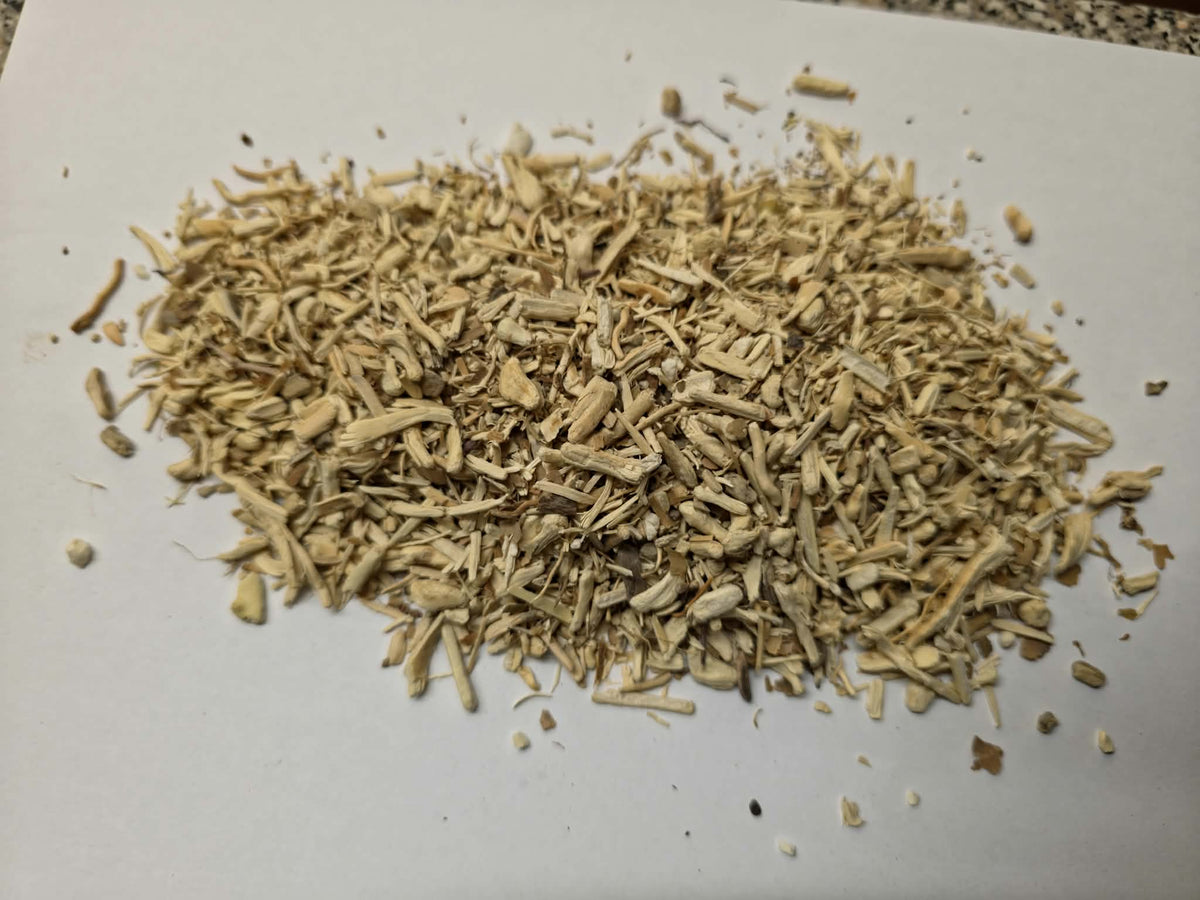
Our Wild Hydrangea Root Cut (Hydrangea arborescens L. / Hydrangea arborescens radix concisus)—ethically wild-harvested from its native woodland habitats in the United States and gently dried—is a supreme, practitioner-grade loose botanical rhizome. Consisting of 100% pure, coarse-cut root and rhizome pieces, this ancient North American botanical is celebrated across traditional Native American ethnobotany, 19th-century Eclectic medicine, and Asian Materia Medica for its profound fluid-balancing qualities and unique urinary tropism.
Processed under strict GMP and HACCP quality management systems, our unadulterated Hydrangea arborescens root contains zero additives, fillers, artificial flavorings, or preservatives. Every batch undergoes comprehensive laboratory screening confirming full compliance with Commission Regulation (EU) 2023/915 for heavy metals, PAHs, mycotoxins, Pyrrolizidine Alkaloids (PAs), Tropane Alkaloids, Perchlorate, Melamine, and Regulation (EC) No 396/2005 for pesticide residues, guaranteeing uncompromised purity and food safety for decoctions and apothecary compounding.
Known historically as Seven Barks, Hortensia, and in Traditional Chinese Medicine as Xiu Qiu (绣球), wild Hydrangea root features a pale, fibrous structure with a mild, earthy scent and a complex taste profile—sweetish, slightly pungent, bitter, and mildly acrid. Rich in active flavonoids (kaempferol, quercetin, rutin), minerals (silica, calcium, magnesium, zinc), cyanogenic glycosides, and the unique alkaloid halofuginone, it remains an indispensable raw material for professional clinical herbalists.
🌿 Traditional Energetics, Affinities & Global Herbal Lore
"Dating back over 70 million years in the North American fossil record—revered across indigenous American ethnobotany and traditional Asian systems as 'Seven Barks', 'Water Vase', and 'Xiu Qiu'—traditionally classified energetically as a cooling, drying, sweet, pungent, and acrid botanical holding a primary affinity for the Kidney, Bladder, and Lung meridians."
Wild Hydrangea carries a rich lineage of historical symbolism, folk wisdom, and botanical science:
- Etymology & The "Seven Barks" Legacy: The botanical name Hydrangea derives from ancient Greek (hydro meaning "water" and angos meaning "vessel" or "jar"), referencing both its marshland habitats and its water-balancing nature. Its common name, Seven Barks, was coined because the root’s outer bark naturally peels off in several delicate, multi-colored layers.
- Native American Heritage: Indigenous peoples of North America, including the Cherokee and Florida Seminole tribes, relied heavily on wild Hydrangea root decoctions to support kidney and bladder fluid pathways, maintain smooth urinary passage, and assist the body's natural handling of minerals.
- Traditional Chinese Medicine (TCM) Distinction: In Eastern herbalism, Western Hydrangea root is recognized as Xiu Qiu (Sweet, Pungent, Cooling/Neutral) and is traditionally utilized to clear heat, disperse phlegm, and tone the lower burner. (Note: This is distinct from the related Asian species Dichroa febrifuga, known in TCM as Chang Shan, which carries a much colder, strongly emetic profile).
- Modern Phytochemical Research: Contemporary studies highlight Hydrangea root's remarkable antioxidant density and its unique constituent halofuginone, a alkaloid compound actively researched in modern botanical literature for its specific interactions with cellular signaling pathways.
🍵 How to Prepare Hydrangea Root Decoctions & Tinctures
Because Hydrangea is a hard, fibrous root rhizome, a covered decoction method is required to properly extract its active constituents into liquid:
- Traditional Covered Decoction: Place 1 to 2 teaspoons (approx. 2–4g) of cut root into a saucepan (preferably glass, enamel, or stainless steel—avoid aluminium). Pour over 1 cup (250ml) of cold water. Cover the pan immediately with a tight-fitting lid.
- Simmering Phase: Bring to a boil, then reduce heat and simmer gently under cover for 10 to 15 minutes. Remove from heat, allow to cool slightly while covered, then strain thoroughly. Sip warm 1 to 2 times daily.
- Apothecary Extractions: Coarsely cut wild root pieces are an exceptional raw material for high-proof hydro-ethanolic extractions (tinctures), typically macerated at a 1:5 ratio in 40–50% alcohol for 4 to 6 weeks.
🔬 Quality Control, EU Compliance & Lab Safety
- Authentic USA Wild-Crafted Origin: Ethically wild-harvested from unpolluted native forest stands in the United States, harvested at optimal root maturity.
- EU Safety & Contaminant Testing: Batch-tested in accordance with Commission Regulation (EU) 2023/915 confirming strict safety limits for heavy metals, PAHs, mycotoxins, Pyrrolizidine Alkaloids (PAs), and Regulation (EC) No 396/2005 for pesticides.
- Low Moisture Stability: Dried to a tight humidity standard (9.69%) to preserve root density while preventing microbial or fungal degradation.
- Non-Irradiated & Non-GMO: Guaranteed 100% pure raw botanical material, non-irradiated, and non-GMO.
- Dispensary Quality Sign-Off: Primary supplier testing data is verified upon batch arrival. An in-house organoleptic assessment (fibrous cut structure, color, acrid-sweet taste) is personally verified by Master Herbalist Wojciech Bujak prior to packaging.
📊 Technical Specifications & Dispensary Standards
| Specification Metric | Dispensary Standard |
| Botanical Name | Hydrangea arborescens L. (Hydrangea arborescens radix concisus) |
| Common / Traditional Names | Wild Hydrangea Root, Seven Barks, Smooth Hydrangea, Hortensia, Xiu Qiu (绣球) |
| Plant Part & Format | 100% Pure Dried Cut Root & Rhizome (Coarse Cut) |
| Quality Grade | Premium Practitioner Grade (Wild-Crafted, EU Food Grade) |
| Country of Origin | United States of America (USA) |
| Key Constituents | Halofuginone, Kaempferol, Quercetin, Rutin, Cyanogenic Glycosides, Silica, Calcium, Magnesium |
| Organoleptic Profile | Pale tan-to-brown cut root particles; mild earthy aroma; sweetish, bitter, pungent, and slightly acrid taste |
| Humidity Level | 9.69% |
| Dietary Suitability | 100% Pure Botanical | Suitable for Vegetarians and Vegans | Non-GMO |
| Packaging | Hand-packed in eco-friendly, resealable, UV-protective PE or Paper barrier bags |
⚠️ Allergen & Cross-Contamination Information
100% Pure Botanical: Contains zero added sugars, artificial colors, flavorings, or chemical preservatives.
- Certified Organic Stream: Processed in a primary facility handling only celery seed and mustard.
- Conventional / Food Grade Stream: Processed in a facility that handles cereals containing gluten, celery, mustard, sesame, peanuts, and various nuts.
- Botanical Remedies Dispensary Standard: On-site at Botanical Remedies, we handle only celery seeds. Strict isolation protocols and rigorous cleaning procedures are maintained to prevent cross-contamination.
⚠️ Important Safety Parameters & Contraindications
- Strict Plant Part Distinction (Roots vs. Leaves): Only the roots and rhizomes of Hydrangea arborescens are prepared for traditional botanical use. The leaves and flowers should never be ingested, brewed, or smoked, as they contain higher levels of cyanogenic glycosides which can cause severe illness.
- Dosing Guidelines: Hydrangea root contains concentrated plant constituents. Always adhere to recommended doses (1 to 2 teaspoons per decoction). High or excessive doses may cause acute gastric irritation, nausea, dizziness, or chest discomfort.
- Pregnancy & Lactation: Strictly contraindicated during pregnancy and breastfeeding unless supervised by a qualified Medical Herbalist or GP.
- Renal & Diuretic Caution: Individuals with severe kidney disorders or those taking prescription diuretic medications should consult their healthcare provider prior to use.
Professional UK Herbalist Standards & Botanical Information
Because of UK law, we cannot make specific medical claims about our botanicals. However, at Botanical Remedies, we only offer herbs that are deeply rooted in traditional literature and backed by rigorous quality research. Please do not confuse our lab-verified, practitioner-grade wild root cut with standard mass-market tea bags.
Where can you find reliable, traditionally and scientifically grounded information about herbs, dosages, and safety?
- Herbal Reality — Website run by experienced UK Medical Herbalists
- Richard Whelan — Website run by Medical Herbalist
- Botanical Remedies Blog — Articles published by our Master Herbalist and Naturopath
⚠️ Disclaimer: This product is a raw botanical food material and is not classified as a medicine. It is not intended to diagnose, treat, cure, or prevent any disease. Always consult your GP or Medical Herbalist before starting a new herbal regime.
Frequently Asked Questions About Wild Hydrangea Root
Q: What is the difference between Western Hydrangea (Xiu Qiu) and Asian Dichroa (Chang Shan)?
A: While both belong to the Hydrangeaceae family and share fluid affinities, Western Hydrangea (Hydrangea arborescens / Xiu Qiu) is native to North America and used primarily for urinary and fluid balance. Asian Dichroa febrifuga (Chang Shan) is a distinct plant used in TCM specifically for clearing severe phlegm and malaria, carrying a much colder, highly emetic profile.
Q: Why is Wild Hydrangea Root called "Seven Barks"?
A: The name "Seven Barks" comes from the unique nature of the plant's root and stem bark, which naturally peels off in several thin, papery layers of different colors, giving the appearance of seven distinct layers of bark.
Q: Can I brew Hydrangea leaves or flowers for tea?
A: No. Only the dried roots and rhizomes are used in traditional herbal practice. The leaves and flowers contain toxic levels of cyanogenic glycosides and should never be consumed or smoked.
Q: How should I prepare Wild Hydrangea Root tea?
A: Because it is a dense root material, you must prepare it as a decoction. Simmer 1 to 2 teaspoons of the cut root in a covered saucepan with 250ml of water for 10 to 15 minutes, then strain.
Share